The Gap Most Audiences Never See
When people watch a successful live performance, brand collaboration, concert tour, influencer campaign, or celebrity appearance, they usually see the artist at the center of it all. What remains invisible is the operational machinery working behind every commitment, negotiation, rehearsal schedule, media interaction, and logistics chain.
That invisible layer is where an artist management company operates.
The modern entertainment ecosystem has become increasingly complex. Artists today manage public appearances, social media expectations, endorsement discussions, performance contracts, travel coordination, production teams, and audience engagement simultaneously. Without structured management, even talented performers can struggle with consistency, scheduling conflicts, or career direction.
This is why artist management companies have evolved from simple booking intermediaries into strategic support systems that help artists navigate opportunities while maintaining professional continuity.
For organizations operating across multiple regions and event formats, understanding how management structures work behind the scenes becomes equally important. Companies looking for regional activation support often explore networks with broader operational reach through platforms like Alive Experiences to coordinate events efficiently across different locations.
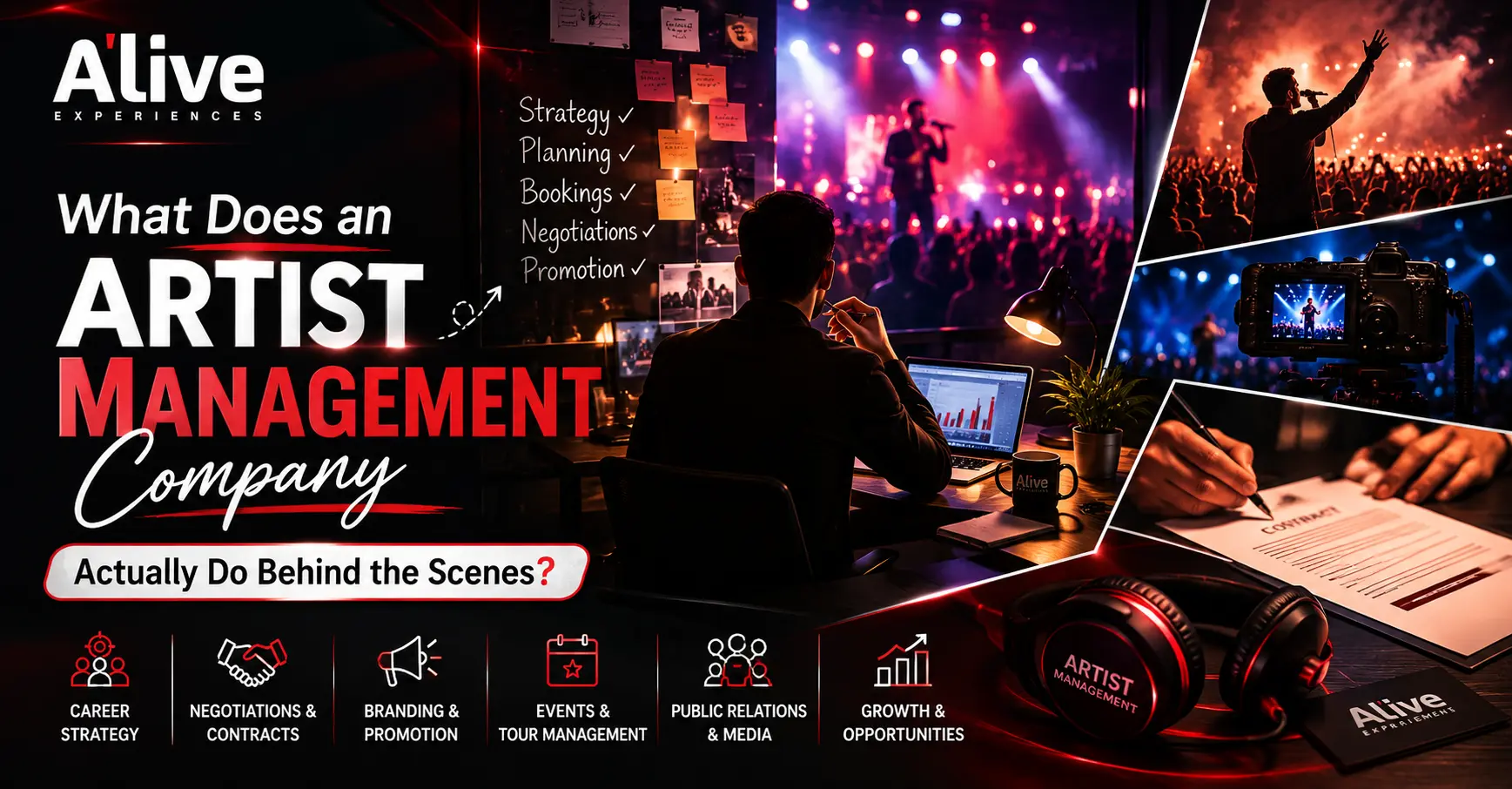
An artist management company is a professional organization that handles the business, operational, promotional, and coordination aspects of an artist’s career. Its responsibilities typically include booking management, contract discussions, scheduling, brand collaborations, public relations coordination, and long-term career planning.
“Behind the scenes” in artist management refers to all non-visible operational activities required to support an artist’s professional engagements. This includes negotiation, logistics planning, event coordination, technical communication, audience management, travel arrangements, compliance handling, and relationship management with brands, venues, and organizers.
The entertainment industry no longer functions through isolated performances alone. Artists now operate across multiple formats simultaneously:
Each engagement involves several moving parts.
A missed technical rider update can impact stage production. Poorly managed timelines may affect audience experience. Miscommunication between organizers and performers can damage professional relationships.
Artist management exists to reduce these operational gaps.
Beyond coordination, management teams also help artists maintain consistency in public positioning. A comedian, musician, motivational speaker, DJ, or celebrity performer may all require entirely different handling approaches depending on audience type, venue expectations, and campaign goals.
This is one reason experienced entertainment coordination firms often develop specialized operational frameworks instead of relying on one-size-fits-all booking processes.
1. Understanding the Artist’s Positioning
Management begins with understanding the artist’s identity, audience relevance, strengths, and long-term direction.
This includes evaluating:
A stand-up comic may align better with youth-focused campaigns, while a classical performer may suit premium cultural events.
The management strategy changes accordingly.
2. Handling Booking Inquiries
One of the most visible functions of artist management is inquiry handling.
However, the process itself is layered.
Teams typically evaluate:
Not every opportunity is suitable for every artist.
Management teams often filter inquiries to maintain professional relevance and operational feasibility.
3. Coordinating Contracts and Deliverables
A major part of artist management involves reducing ambiguity.
Contracts may include:
This stage protects both the organizer and the artist from misunderstandings later.
In larger entertainment ecosystems, contract coordination often requires collaboration between legal teams, event producers, promoters, and brand representatives.
4. Managing Logistics and Production
This is where behind-the-scenes management becomes highly operational.
Teams may coordinate:
Even minor logistical delays can impact event execution significantly.
For large-scale entertainment activations, management companies often work closely with production agencies and venue teams to ensure alignment before the artist arrives onsite.
5. Brand and Media Coordination
Many artists today operate as public brands themselves.
Management companies therefore handle:
This becomes especially important when artists are associated with multiple campaigns simultaneously.
A poorly timed collaboration or conflicting appearance can affect public perception.
6. Relationship and Reputation Management
One overlooked aspect of artist management is long-term professional relationship building.
Experienced management teams maintain relationships with:
These relationships often influence future opportunities and smoother operational execution.
While requirements vary depending on the engagement type, artist management processes often involve documentation such as:
For international performances or regulated venues, compliance documentation may become even more detailed.
Scheduling Conflicts
Artists often receive overlapping commitments. Management teams help prioritize opportunities while maintaining practical timelines.
Communication Gaps
Event organizers, sponsors, production vendors, and artists may all operate with different expectations. Management acts as the communication bridge.
Technical Mismatches
Incomplete sound, lighting, or stage arrangements can affect performance quality. Technical coordination reduces these risks.
Last-Minute Operational Changes
Venue delays, travel disruptions, or revised event schedules are common in entertainment operations. Effective management improves adaptability under pressure.
Brand Alignment Risks
Not every collaboration fits an artist’s image or audience positioning. Strategic filtering helps maintain long-term credibility.
Although the terms are often used interchangeably, they are not always identical.
Aspect |
Artist Management Company |
Talent Booking Agency |
|
Primary Role |
Career and operational management |
Booking coordination |
|
Scope |
Long-term support |
Transaction-focused |
|
Involvement |
Strategic and logistical |
Event-specific |
|
Relationship Duration |
Ongoing |
Often temporary |
|
Responsibilities |
Branding, coordination, planning |
Securing appearances |
In practice, some organizations may offer both functions together depending on project requirements.
Understand Operational Scope
Not all management firms offer identical services. Some focus heavily on bookings, while others handle end-to-end coordination.
Evaluate Industry Experience
Experience across event formats matters because corporate entertainment, live concerts, influencer campaigns, and private events all require different execution models.
Check Communication Processes
Clear communication systems are essential in entertainment operations where timelines frequently shift.
Assess Network Strength
A strong network often improves coordination efficiency across venues, brands, and event partners.
Organizations looking to understand broader entertainment management capabilities often review industry-focused platforms such as Alive Experiences to evaluate operational structure, service categories, and artist engagement models.
An artist manager typically oversees scheduling, artist coordination, venue communication, technical readiness, transportation, hospitality arrangements, and issue resolution to ensure smooth execution during the event.
No. Artist management companies may work with musicians, speakers, influencers, comedians, performers, DJs, entertainers, and emerging talent depending on their operational focus.
Technical riders help communicate stage, sound, lighting, and production requirements in advance. They reduce operational confusion and help maintain performance quality.
Not necessarily. Even smaller events can involve scheduling coordination, travel planning, audience expectations, and contractual requirements that benefit from professional management support.
Management teams often act as intermediaries between brands and artists by handling campaign discussions, deliverables, scheduling, approvals, and communication workflows.
Professional management support becomes increasingly valuable when:
For many artists and event organizers, structured coordination helps reduce uncertainty and improve execution quality.
The goal is not simply to secure appearances, but to ensure operational consistency across every interaction tied to the artist’s professional image.
Behind every successful artist engagement is a layer of planning, communication, coordination, and operational management that audiences rarely see.
An artist management company plays a critical role in connecting creative talent with practical execution. From contracts and logistics to branding and reputation management, these teams help ensure that performances, appearances, and collaborations function smoothly in increasingly demanding entertainment environments.
As live experiences, digital campaigns, and branded entertainment continue evolving, professional artist coordination has become less about visibility and more about operational precision behind the scenes.
If you are exploring artist collaborations, entertainment planning, or large-scale event coordination and are unsure how management processes work, consulting experienced professionals can help you better understand the operational requirements involved.Get expert support for artist bookings, weddings, corporate events, and live entertainment. Reach out through our Contact Us Page or visit our About Us Page to know more about our team and services.